Monofocal
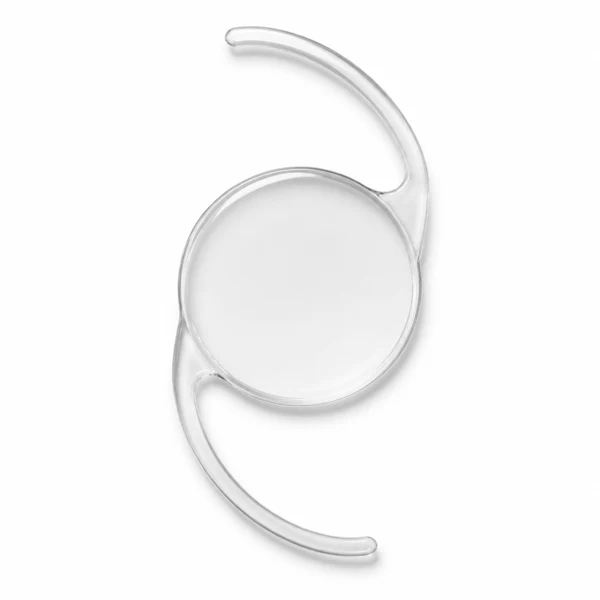
₹Gives sharp vision at one distance — usually far. Reading glasses are needed for close work.
In cataract surgery the cloudy lens is replaced with a clear artificial lens (IOL) that stays for life. There are several kinds. This guide explains what each one does, so you can decide with Dr. Swati what suits your eyes, your work and your budget.

An intraocular lens is a tiny clear lens, about 6 mm across, with two thin arms that hold it in place. It is folded, placed through the same small opening used to remove the cataract, and unfolds inside the eye. You cannot feel it, and it does not need to be changed.
The pictures on this page are illustrations, drawn to show the design of each kind of lens.

Gives sharp vision at one distance — usually far. Reading glasses are needed for close work.

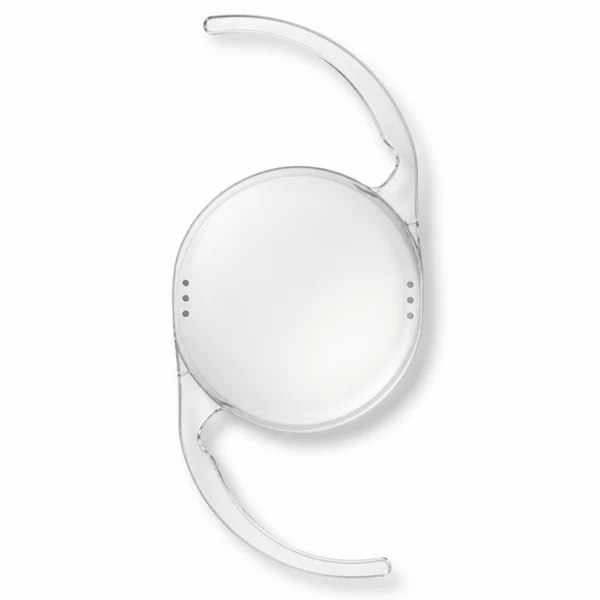
A monofocal lens that also corrects astigmatism — the "cylinder" number on your glasses. Small marks on the lens are lined up with your eye during surgery.

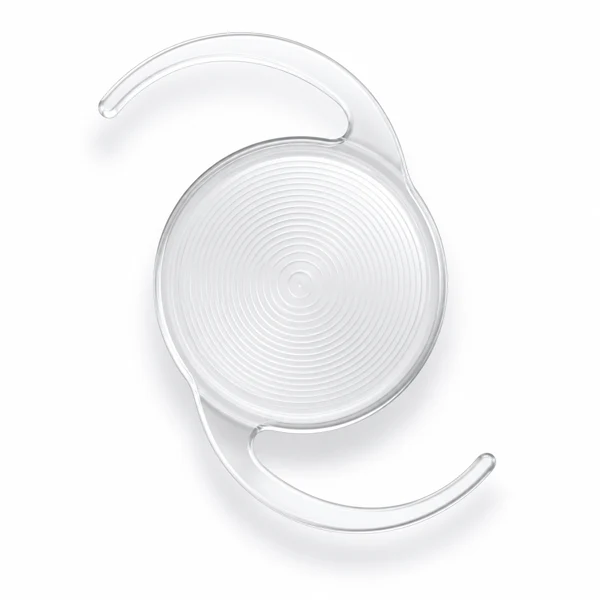
Rings on the lens split light into distance, middle (computer) and near focus. Most people do most daily tasks without glasses.

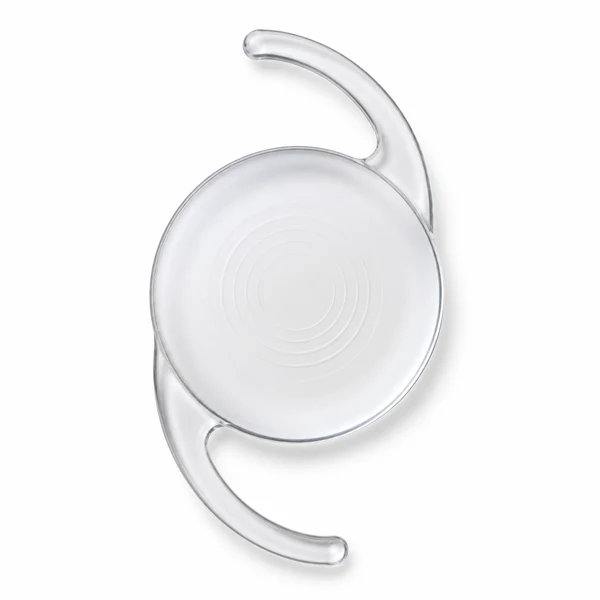
Stretches clear vision from distance into the middle range — car dashboard, computer, cooking.
| After surgery | Monofocal | Toric | Multifocal / Trifocal | EDOF |
|---|---|---|---|---|
| Distance (driving, TV) | ●●● | ●●● | ●●● | ●●● |
| Middle (computer, cooking) | ● | ● | ●●● | ●●● |
| Near (reading, phone) | – | – | ●●● | ●● |
| Corrects astigmatism | – | ✓ | toric version | toric version |
| Halos at night | Fewest | Fewest | More likely | Some |
| Relative cost | ₹ | ₹₹ | ₹₹₹ | ₹₹–₹₹₹ |
●●● clear without glasses for most people · ● may need glasses · – glasses needed. Results vary from eye to eye.
Dr. Swati uses both Indian and imported lenses. All lenses used are approved for use in India, and all are permanent. She can tell you which lenses are available for your eye at the visit.
Most lenses today are soft, foldable acrylic. Hydrophobic acrylic repels water; hydrophilic acrylic holds some water and is softer. They differ in how they unfold in the eye and in how likely the thin layer behind them is to turn hazy years later. Dr. Swati can explain the material of the lens offered to you.
The right lens depends on your eye measurements, other eye conditions, how you use your eyes, and your budget. Dr. Swati will go through the options with you after the examination and biometry.
Book a visit, or ask on WhatsApp. Mon–Sat, 9:30 am – 7 pm.