
Normal eye pressure is usually between 10 and 21 mmHg. But the number on its own does not say whether you have glaucoma. Some people have glaucoma with pressure in the normal range, and others have pressure above 21 with a perfectly healthy eye. To know for sure, the doctor looks at the pressure together with the optic nerve, an OCT scan and a visual field test.
What eye pressure is
The front of the eye is filled with a clear fluid. The eye makes this fluid all the time and drains it out through a tiny channel near the edge of the coloured part (the iris). When making and draining are in balance, the pressure stays steady. If the drain works less well, fluid builds up and the pressure rises.
Eye pressure has nothing to do with blood pressure. Both are measured in mmHg, which is where the confusion comes from.
How it is measured
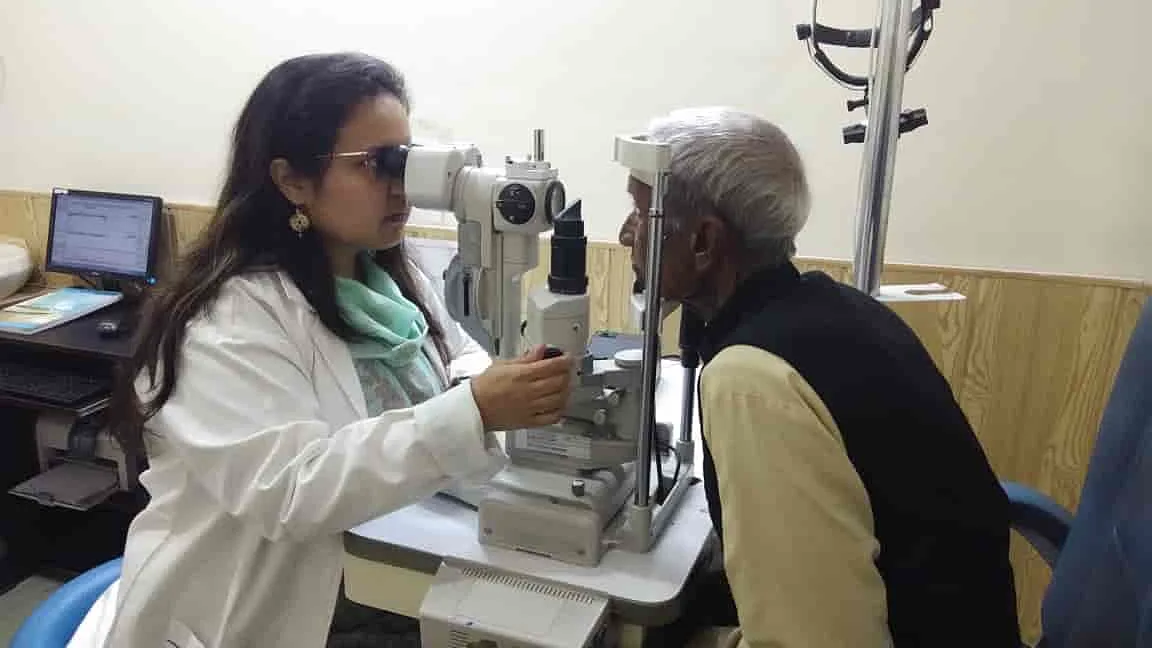
The test is called tonometry. It is quick and painless.
- Air-puff test: a soft puff of air on the eye. Good for screening.
- Applanation test: after a numbing drop, a small instrument lightly touches the front of the eye. This is the more accurate reading, used when glaucoma is suspected or being treated.
Why one reading is not enough
- Pressure changes during the day. For many people it is higher in the early morning. A single normal reading in the afternoon can miss a high morning pressure.
- The thickness of the cornea changes the reading. A thick cornea can make the pressure look higher than it is, and a thin cornea can make it look lower. A short test called pachymetry measures this.
- High pressure is not always glaucoma. Pressure above 21 with a healthy nerve and normal fields is called ocular hypertension. It needs regular checks; some people need treatment.
- Normal pressure does not rule out glaucoma. In normal-tension glaucoma the nerve is damaged even though the pressure is in the normal range. This is why the nerve itself is checked.
Can you feel high eye pressure?
Usually no. In the common type of glaucoma the pressure rises slowly, there is no pain, and vision is lost from the edges first, so most people notice nothing until late.
The exception is a sudden attack of angle-closure glaucoma: severe eye pain, a red eye, blurred vision, coloured rings around lights, headache and sometimes vomiting. This is an emergency — go to an eye hospital the same day.
A regular headache is very rarely caused by eye pressure.
What can raise eye pressure
- Steroid medicines — especially steroid eye drops used without a doctor's advice, and long courses of steroid tablets or creams around the eyes
- A family history of glaucoma
- An old injury to the eye
- High minus or plus spectacle power, diabetes and age over 40 raise the risk of glaucoma itself
Who should have it checked
- Everyone over 40, every one to two years, even with perfect vision
- Earlier and more often if a parent, brother or sister has glaucoma, or if you have diabetes, high spectacle power, or use steroids regularly
- Anyone told in the past that their pressure was "a little high"
If you have glaucoma: your target pressure
There is no single "safe" number for everyone. The doctor sets a target pressure for you, based on how much damage there is and how fast it has been changing. Treatment — drops, laser or surgery — aims to keep you at or below that target. Your OCT and field tests show whether the target is right.
Never stop glaucoma drops because your pressure reading came back normal. It is normal *because* of the drops.
Common questions
My eye pressure is 22. Do I have glaucoma?
Not necessarily. You need a check of the optic nerve, an OCT, a visual field test and the cornea's thickness. Many people with a pressure of 22 never develop glaucoma, but they need regular checks.
Can I check my eye pressure at home?
Not reliably. Home devices are used only in special cases under a doctor's guidance.
Does exercise or yoga change eye pressure?
Regular moderate exercise like walking is good. Long head-down positions, such as headstands, can raise eye pressure; if you have glaucoma, ask your doctor before doing them.
Is the test painful?
No. At most you feel a light touch after the numbing drop, or a puff of air.
---
Read more on the Glaucoma page and in Glaucoma: eye pressure, the optic nerve, and the three tests that matter. Have reports and want to know what they mean? Ask Dr. Swati on a video call.
This article is general information. Please see a doctor about your own eyes.