
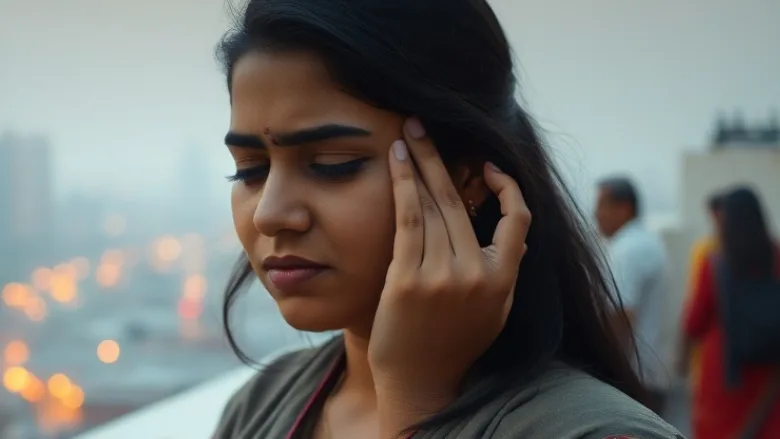
Burning, redness, watering and a gritty feeling on smoggy days are usually irritation of the eye's surface, not an infection. They mostly settle when you cut down exposure, wash the eyes with clean water and use lubricating drops. See a doctor if there is pain, blurred vision that does not clear when you blink, a thick discharge, or no improvement in two to three days.
Why smog makes the eyes burn
The front of the eye is covered by a thin layer of tears that keeps it smooth and comfortable. Smoke, dust and the fine particles in smog (PM2.5) settle on this layer and break it up. The eye's surface dries in patches and reacts — with burning, redness and, often, extra watering. The watering is the eye trying to wash itself, not a sign that the eyes are wet enough.
Smog is usually worst in the early morning and late evening, on still winter days, and near traffic.
Who feels it more
- People who already have dry eyes or eye allergy
- Contact lens wearers
- People who ride two-wheelers, or work outdoors or near traffic
- Older people and children
- Anyone who has had eye surgery in the last few weeks
- People who spend long hours on screens — we blink less while looking at a screen
What helps
- Splash clean, cool water on closed eyes, two or three times a day, especially after coming in from outside.
- Lubricating eye drops (artificial tears) soothe the surface. Preservative-free drops are gentler if you need them more than four times a day.
- A cold compress — a clean cloth dipped in cool water, on closed eyes for a few minutes.
- Glasses or sunglasses outdoors, and a visor on two-wheelers, keep much of the dust and wind off the eyes.
- Leave contact lenses out on bad-air days; wear glasses instead.
- Stay indoors when the air quality is very poor, especially early morning and evening. Keep windows closed at those times.
- Take screen breaks: every 20 minutes, look at something far away for 20 seconds and blink fully.
- Drink enough water.
What not to do
- Do not rub your eyes. It feels good for a moment but makes the irritation worse and can scratch the surface.
- Do not use steroid drops or "redness relief" drops without a doctor's advice. Steroid drops used on your own can raise eye pressure and lead to glaucoma or cataract. Redness-relief drops only hide the redness for a while.
- Do not put home remedies in the eye — rose water from the market, milk, ghee or honey can carry germs.
- Do not use someone else's drops, and do not use a bottle more than a month after opening it.
When to see a doctor now
- Eye pain, or pain when you look at light
- Blurred vision that does not clear when you blink
- Thick yellow or green discharge, or eyelids stuck together in the morning
- Anything that got into the eye and is still there, or an injury
- You had eye surgery recently
- No improvement after two to three days of the steps above
If you have glaucoma, keep using your glaucoma drops as usual. If you also need lubricating drops, leave about five minutes between the two.
Common questions
Is it conjunctivitis (eye flu)?
Usually not. Irritation from smog affects both eyes at the same time, gets better indoors and has no thick discharge. Eye flu often starts in one eye, spreads to the other and comes with sticky discharge. If you are not sure, have the eye checked.
Can I buy eye drops from the chemist?
Plain lubricating drops (artificial tears) are safe for most people. Any drop with a steroid, an antibiotic or a "redness relief" ingredient should be used only on a doctor's advice.
Do masks help the eyes?
A mask protects your lungs, not your eyes. For the eyes, glasses or wraparound sunglasses help more.
My child's eyes are red every morning in this season. What should I do?
Cool water, less time outdoors on bad-air days, and no rubbing. If the redness continues, or your child complains of blurred vision or pain, see an eye doctor.
---
Already have dry eyes from screens? Read Dry eyes and screen work. If your eyes keep troubling you and you cannot come in, you can ask Dr. Swati on a video call.
This article is general information. Please see a doctor about your own eyes.